What about the deer?

We typically have two kinds of gardens in our neighborhood; fenced and unfenced. Our unfenced gardens have things like lavender, sage, rosemary, and other plants that deer typically do not like. Everything else goes behind a fence. All of the annuals and vegetables go behind a fence, lest the deer eat them all. When I say all, I mean the real all. The deer ate everything!

I have tried a number of times to try to grow annuals outside of the deer fence. At first, I just planted things like I always did- make a raised bed and plant. As soon as anything green appeared, it just as suddenly disappeared. I read about Sepp Holzer‘s throw sow method of growing and Masanobu Fukuoka’s techniques tried them. I thought maybe I just needed a diversity of crops planted very closely. I mixed together a variety of seeds and soil and cast them on the ground. Things soon sprouted, and just like previous attempts, they disappeared.

I knew it possible to grow in this area without fences because Matt Powers was doing it in a very similar area to the south of us. I had seen it work. I just had to figure it out.

This spring I had a bunch of seeds that had been lying around that I knew I would not ever get to plant in our fenced vegetable garden. There was just not enough room, and there was never going to be enough room. What the heck I thought, Why not give it a try. I mixed a bunch of seeds together- corn, amaranth, squash, radishes and anything else that was lying around. I soaked them overnight, mixed in some compost, and spread it willy-nilly in an area I had cleared. With our huge bird and squirrel populating I thought I needed to cover the seeds more, but I didn’t have any more compost. I grabbed some trimmers and went and trimmed a bunch of plants to use as mulch.
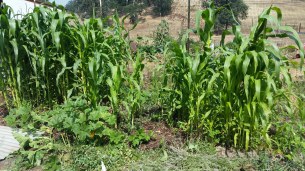
Garden picture

This patch of annual vegetables is on the outside of the deer fence. As seedlings, they were protected only with a thin mulch layer trimmed from deer resistant shrubs.

I week or so later I could see the little plants under the mulch! They hadn’t been eaten! They kept getting bigger and bigger, and the deer were pretty much ignoring them! It was the mulch that mattered. In one section I had used artemisia trimmings. Deer never touch that plant. I also had a section covered with trimmings from heavenly bamboo, and in the middle section, I used oregano trimmings. Three plants that I knew deer don’t touch. When looking at it now I can see that the deer did, in fact, browse down the middle oregano section. But the other two sections are doing very nicely indeed. Better even than the plants I started indoors and transplanted after danger of frost.  The only question will be if the plants mature before the killing frost comes. In the best case, I have a whole new huge growing area.  In the worst case, I will have a lot of biomass and a bunch of green pumpkins to put into a curry. Either way, I will call it a win.
A New Favorite Plant

Yep, I have a new favorite plant.

Ever since the Butte Fire destroyed our community a few years ago we have been looking for ways to make our home more fire safe. Our area in the California foothills is prone to wildfires and when one gets going they can be difficult to stop. When they can’t be stopped quickly they become what is known as a campaign fire. In these fires, firefighters go out ahead of the fire and make plans as to which homes they are going to defend and which ones they are not going to defend.

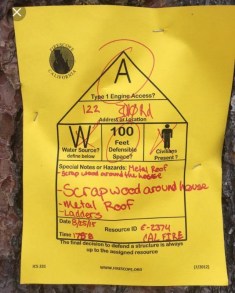
Fire triage form

In a wildfire, homes are often triaged, with firefighters deciding which homes have the best chance of being saved.

There are never enough resources to defend them all, so firefighters pick the homes they are most likely to be successful in defending. If a home is surrounded by trees and shrubbery- wildfire fuels- they are likely to label your home as ‘Do Not Defend.’  Folks who get these labels often do not know it, as their house likely burned down. What you want is to get a ‘triage card that encourages crews to defend your home. When the fire approaches these homes, the firefighters take a stand and defend the home. We are more focused than ever to get a good triage rating.

Picture of Artemisia

Artemisia provides attractive foliage, repels deer, and adds lots of organic matter to the soil.

So this spring I am removing all the plant material that lies within 10 feet of the house. The shredded cedar bark ground cover will be removed and replaced with some variety of rock. Stuff that won’t burn. I have been digging up these plants and transplanting them to other areas. I remember planting these landscape specimens fifteen or so years ago. It was a lot of work. The soil was compacted clay. The new plants were in one-gallon containers, so the holes I had to dig weren’t very big, but that ground was hard!  But going to dig the by now much larger plants out I was pleasantly surprised. The artemisia came out very easily. The soil was rich and dark, full of worms and organic matter. I had added nothing to the soil here over the years. All of that organic matter that the plant was thriving in had come from the plant itself! It was like magic! I need to figure out a way to move that soil somewhere else before I cover it up with rocks!

0W8A1453

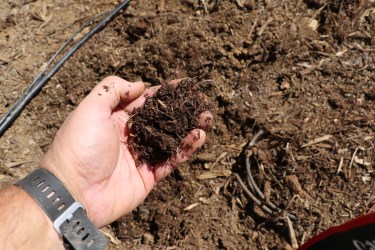
This rich soil was compacted clay several years ago when I planted artemisia in it.

We started planting artemisia when our kids were in 4H and my youngest son was raising angora goats. I had read that artemisia, or wormwood as it is also known, was good for keeping goat intestinal parasites at bay. I planted some near the goat barn and quickly learned that the goats did not like to eat artemisia. It was like giving kids medicine. Wait, it WAS giving kids medicine! (See what I did there?) The goats didn’t eat it, but we kept the plants around as a nice filler.

Now it is my favorite plant. (Full disclosure: I adopt a new ‘favorite plant’ nearly weekly.) I planted the artemisia in a hedgerow along the vegetable garden, along with some heavenly bamboo and buddleia. The hedgerow will serve as a home for insects, birds, and lizards, act an a windbreak and repel deer. And the artemisia will work to add all kinds of organic material to the soil over time. My new favorite plant.